People sometimes ask us what we do with the eggs our hens lay at the sanctuary. If the eggs are not fertilized and no chick is going to be born, why don’t we just eat them?
The simple answer is that the eggs are not ours. They belong to the hens.
For us, veganism is not only about whether an animal is being treated well or badly. It is also about not using animals or taking from them something that doesn’t belong to us. We don’t need to eat their eggs, and the fact that they live at a sanctuary doesn’t suddenly make those eggs ours.
But there is also something happening inside a hen’s body every time she produces an egg that many people don’t know about.
Why do hens lay eggs without a rooster?
A hen does not need a rooster to produce an egg. The process begins when a yolk is released from her ovary. As it travels through the oviduct, the different parts of the egg form around it: the egg white, the membranes and, eventually, the shell.
According to the University of Illinois Extension, this entire process takes approximately 24 to 26 hours.
A rooster is needed for fertilization, not for egg production. If the egg isn’t fertilized, the hen can still produce and lay it normally. There simply won’t be a developing chick inside.
You may have heard people describe an unfertilized egg as a chicken’s period. It’s an easy comparison to understand, but it isn’t biologically accurate. Chickens don’t menstruate like humans do. They have their own reproductive cycle, and laying an egg is part of that cycle.
What is important for this conversation is that producing eggs requires resources from the hen’s body.
Making an egg takes resources from her body
Think about the shell alone. A hen needs a considerable amount of calcium to create it. Calcium from her diet is important, but during shell formation she can also mobilize calcium stored in a specialized type of bone called medullary bone. The Merck Veterinary Manual explains how calcium metabolism and the demands of eggshell production are closely connected to skeletal health in laying hens.
And today’s laying hens produce a lot of eggs. Humans have selectively bred chickens for generations to increase egg production. That has created birds capable of producing far more eggs than their ancestors, and that level of production can have consequences for their bodies.
Scientific research has documented osteoporosis and bone fractures as significant welfare problems in laying hens. A review published in Frontiers in Veterinary Science discusses how genetics, nutrition, housing and sustained egg production can all contribute to bone damage in laying hens.
This is one of those things that looks very different when you stop looking at an egg as a product and start looking at the animal who produced it. At the supermarket, we see a carton of eggs. At the sanctuary, we see the hen.
So what happens to their eggs?
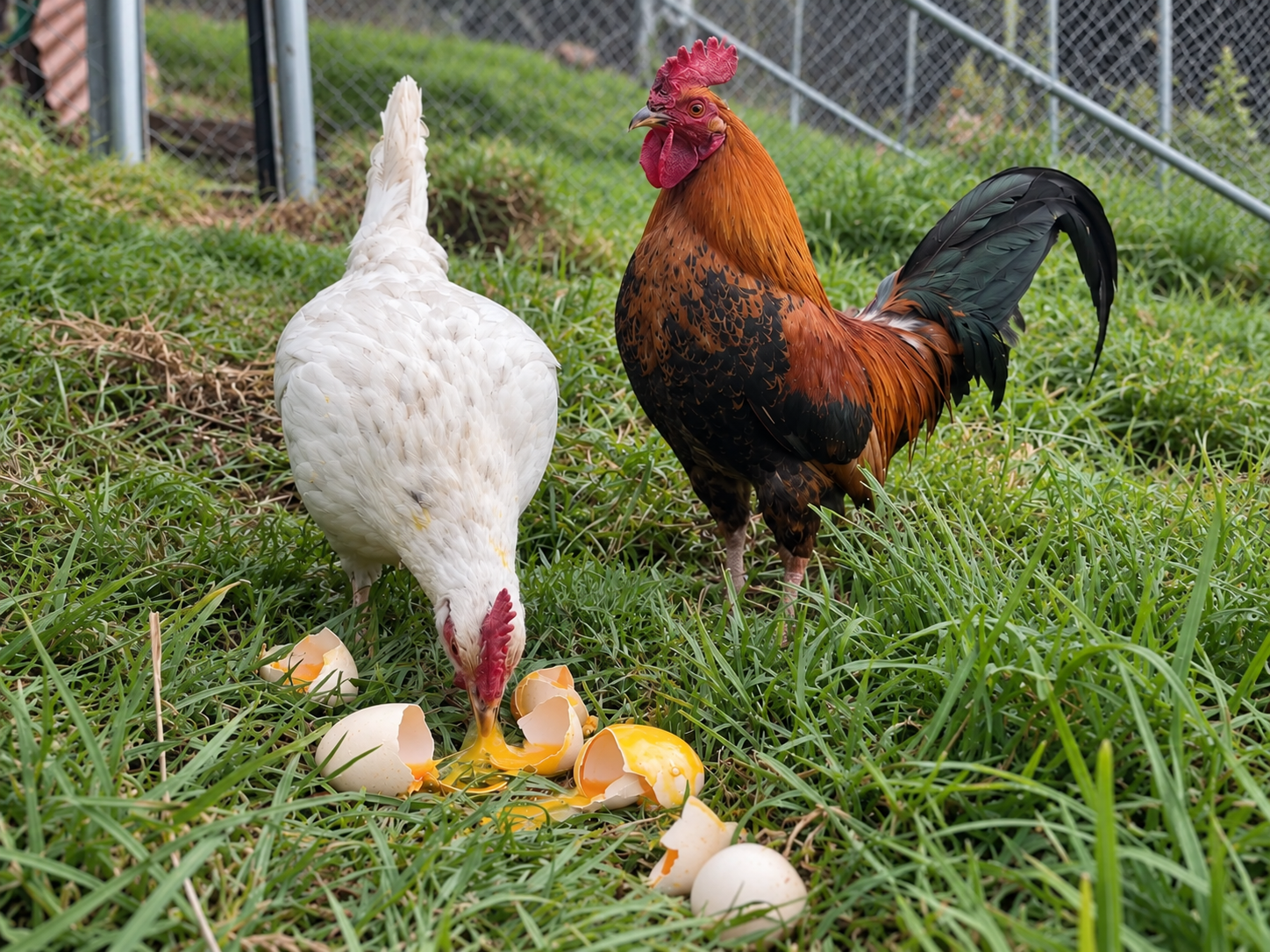
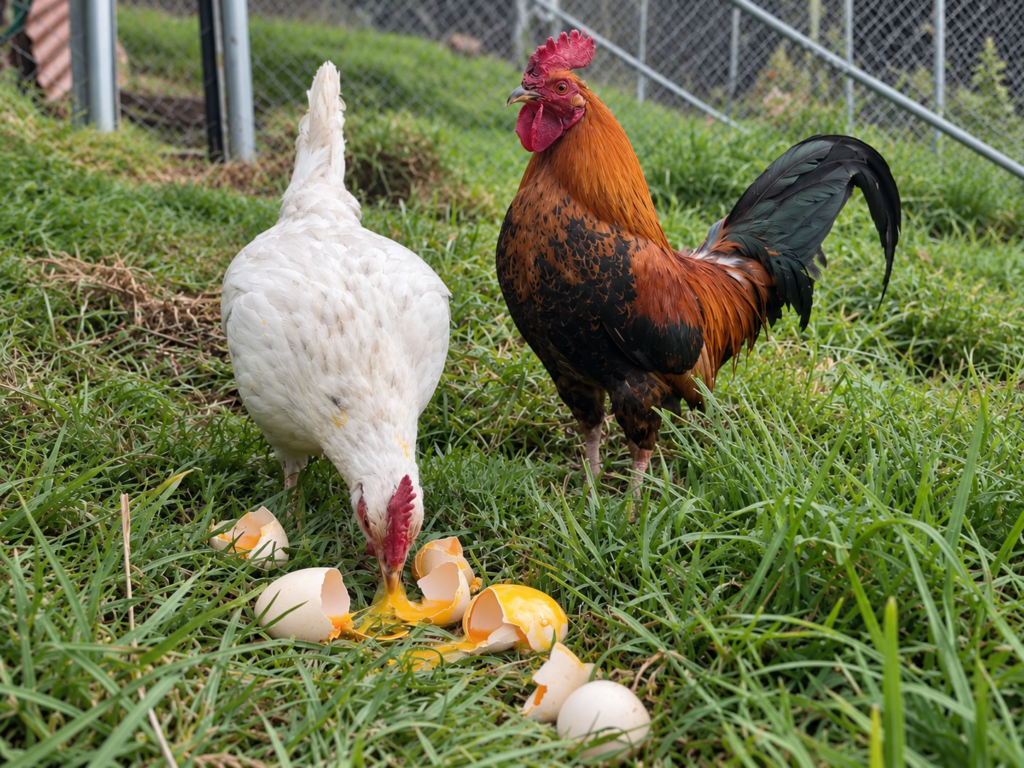
At our sanctuary, we give the eggs back to the animals who produced them.
Eggs contain protein and many other nutrients, while eggshells are largely composed of calcium carbonate. Calcium is particularly important for laying hens because of the amount required to repeatedly produce shells. Resources from the University of Georgia Cooperative Extension explain the importance of providing laying hens with sufficient calcium and a properly balanced diet.
This doesn’t mean that every hen needs to eat every egg she lays in order to remain healthy. With appropriate nutrition, her dietary requirements can be met in other ways.
But at a sanctuary, there is no reason we need to turn her eggs into food for ourselves. She made the egg, and her body used its resources to make it. We don’t need it, so why would it automatically belong to us?
“But nobody is being harmed”
This is usually where the conversation about backyard or rescued hens becomes interesting.
Imagine a hen who has plenty of space, good food, veterinary care and everything she needs. She lays an unfertilized egg and walks away from it. Would eating that particular egg hurt her? Maybe not, but for us, that isn’t really the question.
Veganism isn’t simply about avoiding the most obvious forms of cruelty. If that were the case, the discussion would always be about finding nicer ways of using animals. Our position is different because we believe animals don’t exist to provide things for us.
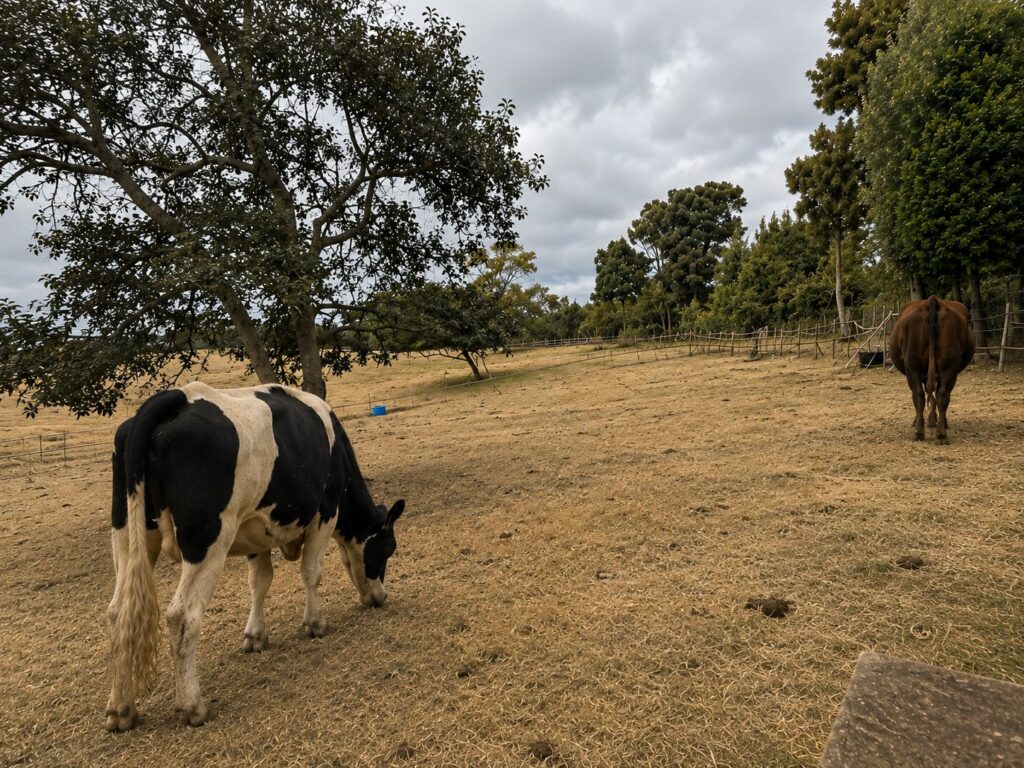
The cows at our sanctuary don’t owe us milk. The sheep don’t owe us wool. The hens don’t owe us eggs. They live here because this is their home.
After spending so many years living with farmed animals, you stop seeing an egg as something a chicken produces for you. You see the hen first: an individual with her own body, needs, preferences and life.
And once you see it that way, our answer to what happens to the eggs at the sanctuary is pretty simple. They were hers in the first place.